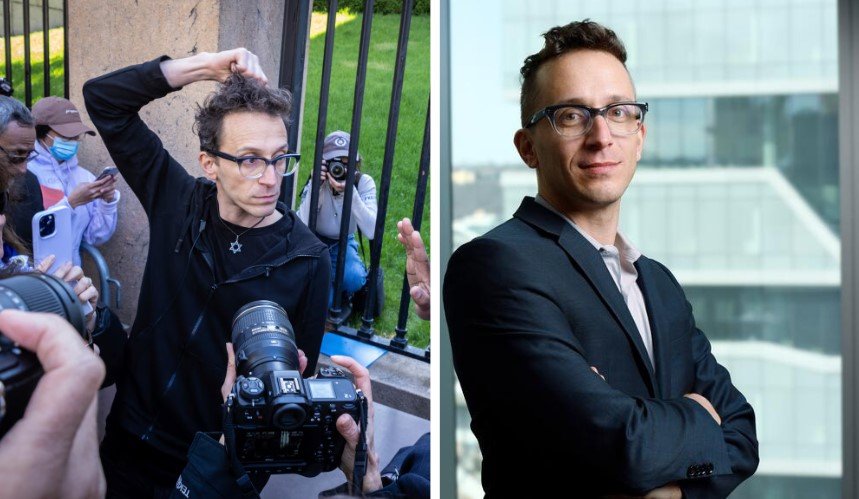
Shai Davidai is an Israeli-born academic and associate professor whose name became widely recognized during the heated debates over antisemitism, Israel, and campus protests at Columbia University.
Although his professional background is in business and social psychology, his public profile expanded significantly after the October 7, 2023, attacks and the demonstrations that followed on American university campuses. Davidai attracted national attention through his criticism of Columbia University’s response to antisemitism and his outspoken comments about student activism. His statements, public appearances, and disagreements with university leadership made him a prominent figure in discussions about academic freedom and campus safety. Supporters have praised his willingness to speak openly, while critics have challenged aspects of his rhetoric and approach. His story offers a closer look at an academic whose professional career became closely intertwined with one of the most contentious debates in American higher education.
Quick Bio
| Detail | Information |
|---|---|
| Full Name | Shai Davidai |
| Known For | Academic research, public commentary, and pro-Israel activism |
| Famous Connection | Columbia University |
| Relationship | Former assistant professor at Columbia Business School |
| Profession | Academic, social psychologist, public speaker, and activist |
| Birth Date | Not reliably documented in authoritative public sources |
| Birthplace | Israel |
| Nationality | Israeli |
| Children | Two children, according to his personal biography |
| Education | Hebrew University of Jerusalem and Cornell University |
| Current/Public Status | Former Columbia professor; active in public commentary and advocacy |
Who Is Shai Davidai?
Shai Davidai is an Israeli academic who developed a research career in social psychology before becoming a prominent public voice on antisemitism and university campus politics. His academic work examines how people understand themselves, evaluate others, and interpret social and economic conditions.
Before becoming a recognizable figure in American public debate, Davidai was primarily known within academic circles for research into judgment, decision-making, social comparisons, inequality, and perceptions of opportunity.
His career took a significant turn following the October 7, 2023, Hamas-led attacks on Israel. The subsequent protests at American universities, particularly Columbia University, brought him into the national spotlight.
Davidai openly criticized what he considered inadequate responses to antisemitism on campus. He also challenged university administrators and publicly confronted individuals whom he believed were contributing to an environment hostile to Jewish students.
His approach attracted considerable support as well as criticism. While some regarded him as an important advocate for Jewish students, others questioned his methods and his public treatment of student activists.
Understanding Shai Davidai therefore requires looking at two connected parts of his life: his academic research and his increasingly visible role in debates about Israel, antisemitism, and American higher education.
His Early Life and Israeli Background
Shai Davidai was born and raised in Israel, although detailed information about his childhood and family background is not extensively documented in authoritative public sources.
His Israeli background is an important part of understanding his later public identity. Israel, Jewish identity, and the relationship between politics and society became prominent subjects in his public commentary, particularly after October 2023.
However, his original professional interests were rooted in psychology rather than political activism. His education focused on understanding human behavior, thought processes, and the ways individuals make decisions.
Davidai eventually pursued higher education in both Israel and the United States. This international academic experience helped establish the foundation for his career as a researcher and university professor.
Education at the Hebrew University of Jerusalem
Davidai completed his undergraduate education at the Hebrew University of Jerusalem, where he studied psychology and cognitive science.
These subjects provided a foundation for understanding how people process information, develop opinions, and make decisions. Psychology examines human behavior and mental processes, while cognitive science considers how the mind handles information.
His undergraduate studies were followed by doctoral research in the United States. Moving from Israel to an American academic environment expanded his research opportunities and introduced him to a wider community of scholars.
His educational background also helps explain the subjects that later became central to his academic publications, including social comparison, inequality, judgment, and decision-making.
Doctoral Studies at Cornell University
One of the most important stages in Shai Davidai’s professional development was his time at Cornell University.
He earned a PhD in Social and Personality Psychology in 2015. His doctoral research helped establish his interest in how individuals understand their social surroundings and evaluate their own circumstances.
Social and personality psychology examines the relationship between individual behavior and wider social influences. Researchers in this field investigate subjects such as identity, attitudes, relationships, motivation, and judgment.
Davidai’s academic interests developed around questions that have practical implications for everyday life. For example, why do people interpret economic inequality differently? How do personal experiences influence judgments about fairness? Why do individuals sometimes view social situations as competitions in which one person’s success must mean another person’s loss?
These questions became important themes in his subsequent research.
Building an Academic Career Before Columbia
After completing his doctorate, Davidai continued his professional development through academic appointments at respected American institutions.
Between 2015 and 2016, he worked as a postdoctoral research fellow at Princeton University. This position allowed him to continue developing his research and gain experience within another major university environment.
In 2016, he joined The New School for Social Research as an assistant professor of psychology. He remained there until 2019.
These appointments helped establish his reputation as a researcher interested in the psychological foundations of social judgments.
Rather than concentrating on one narrow subject, his work connected individual thinking with broader questions about society. This combination eventually became a defining feature of his academic career.
Joining Columbia Business School in 2019
In 2019, Shai Davidai joined Columbia Business School as an assistant professor in its Management Division. The appointment represented an important step in his academic career.
At Columbia, his research focused on the psychological forces that influence how people understand themselves, other individuals, and society. His areas of expertise included decision-making, negotiations, leadership, organizational behavior, economic inequality, and social mobility.
His work was particularly relevant to understanding how people interpret opportunities and disadvantages. These subjects are important in business education because perceptions of fairness, competition, and social standing can influence workplace relationships and organizational decisions.
Davidai’s Columbia appointment also gave him opportunities to work alongside researchers from different academic backgrounds. He continued publishing research while teaching and participating in the university’s intellectual community.
His position at Columbia eventually became the setting for the public controversy that transformed his professional identity.
What Is Shai Davidai Known for in Academic Research?
Although much of the public attention surrounding Davidai concerns his activism, his academic research remains an important part of his professional background.
His work examines how people make judgments about themselves and others. One recurring theme is the influence of psychological biases on people’s understanding of social and economic conditions.
He has contributed to research published in established academic journals, including Science Advances, Proceedings of the National Academy of Sciences, and the Journal of Personality and Social Psychology.
His research interests include several interconnected subjects:
- Social comparison: How individuals evaluate their position by comparing themselves with others.
- Economic inequality: How people understand differences in wealth, income, and opportunity.
- Social mobility: How individuals perceive the possibility of improving their economic or social circumstances.
- Decision-making: How psychological influences shape personal and collective choices.
- Zero-sum thinking: Why people sometimes believe that one person’s gains must come at another person’s expense.
One notable research topic was zero-sum thinking, which examines the belief that resources, opportunities, or advantages are limited. His collaborative research investigated how political ideology can influence this way of interpreting social situations.
This academic background is particularly interesting because Davidai later became involved in highly polarized public discussions. His research experience in understanding human judgment provides context for the intellectual interests that shaped his professional career.
Who Is Columbia University and Why Is It Important to His Story?
Professional institution and central connection
Columbia University is a major American research university located in New York City. Founded in 1754, it is one of the country’s oldest institutions of higher education.
Its business school, Columbia Business School, offers graduate business education and conducts research in management, economics, finance, and organizational behavior.
For Davidai, Columbia was more than an employer. It was the institution where he developed an important part of his academic career and later became a central figure in campus debates.
His connection with the university became especially significant after the October 2023 attacks on Israel and the subsequent demonstrations at Columbia.
As tensions increased, Davidai became increasingly vocal about what he considered the university’s failure to protect Jewish students and respond adequately to antisemitism.
His criticism placed him at the center of a wider disagreement about the responsibilities of universities, the limits of campus protest, and the protection of different viewpoints.
How October 7, 2023, Changed His Public Profile
The October 7, 2023, Hamas-led attacks on Israel marked a major turning point in Davidai’s public life.
Following the attacks, demonstrations and political disagreements spread across university campuses in the United States. Columbia became one of the most closely watched institutions because of the scale of its protests and the intensity of disagreements among students, faculty members, and administrators.
Davidai began speaking more frequently about antisemitism and the experiences of Jewish students. He criticized protest activities that he believed crossed the line into hostility toward Jewish people.
He also used social media to share his opinions, publish videos, and challenge university officials.
His willingness to confront administrators directly made him increasingly recognizable outside academic circles. News organizations began covering his statements and disagreements with Columbia.
For Davidai, the issue was not simply a disagreement about university policy. He presented his activism as part of a broader effort to challenge antisemitism and defend Jewish students.
However, the demonstrations also involved wider disagreements about Palestinian rights, Israel’s military actions in Gaza, freedom of expression, and university investment policies. Those competing concerns made the campus environment particularly difficult to navigate.
Becoming a Prominent Voice Against Antisemitism
Davidai gradually developed a public identity beyond his work as a business school professor.
He became a prominent advocate against antisemitism on American university campuses. His commentary focused on the experiences of Jewish students, the language used during demonstrations, and how university administrators responded to campus tensions.
His position attracted support from people who believed that universities were not doing enough to address antisemitism.
For these supporters, Davidai represented an academic willing to challenge powerful institutions rather than remain silent during a difficult period.
At the same time, his confrontational approach attracted criticism. His public interactions with university employees and his commentary about student activists became subjects of disagreement.
This division contributed to his reputation as a polarizing figure. His supporters and critics often interpreted the same incidents very differently.
His experience illustrates how university professors can become public figures when their professional responsibilities intersect with major political and social controversies.
His Social Media Presence and Public Communication
Social media became an important part of Davidai’s public activity.
Instead of limiting his criticism to academic discussions or university meetings, he used online platforms to communicate directly with a much wider audience.
His videos and posts addressed campus demonstrations, university decisions, antisemitism, and the broader debate surrounding Israel.
This approach helped his message reach people who might never have encountered his academic research.
It also exposed him to greater scrutiny. Public statements can travel beyond their original context, and disagreements that might once have remained within a university can quickly become national news stories.
Davidai’s online presence therefore became an important element of his public identity.
His personal website describes his post-October 7 activism, speaking engagements, media appearances, and podcast projects. It also presents his work as an effort to address antisemitism and strengthen Jewish continuity.
The Columbia Campus Restrictions in 2024
One of the most significant episodes in Davidai’s relationship with Columbia occurred in October 2024.
The university temporarily restricted his access to campus following confrontations involving university employees.
Columbia said that Davidai had repeatedly harassed and intimidated employees in violation of university policies. The institution stated that the restrictions were connected to workplace conduct and that his right to express his views had not been taken away.
Davidai, however, publicly objected to the decision. He connected the university’s action to his criticism of its handling of campus protests and antisemitism.
The disagreement received extensive media attention because it raised difficult questions about the relationship between academic freedom and workplace conduct.
A professor’s right to express political opinions does not automatically remove the obligation to follow institutional policies. Similarly, universities face difficult decisions when attempting to balance employee conduct rules with freedom of expression.
The restrictions did not initially end Davidai’s employment or affect his compensation, according to the university’s public statements at the time.
Why His Relationship With Columbia Became Controversial
Davidai’s relationship with Columbia became increasingly strained as the campus disagreements continued.
His public criticism of administrators attracted attention from supporters of stronger university action against antisemitism. However, some students and other members of the university community disagreed with his methods and political positions.
The controversy involved more than one individual or incident. It reflected a wider struggle over how American universities should respond to protests connected to the Israel-Palestine conflict.
Several major questions shaped the debate:
- How should universities distinguish political criticism from antisemitic expression?
- What responsibilities do institutions have toward Jewish and other minority students?
- How should administrators respond when protests disrupt university activities?
- Where should universities draw the line between protected speech and conduct that violates institutional rules?
- How can academic freedom be protected while maintaining a safe learning environment?
Davidai became one of the most visible participants in these discussions. His experiences at Columbia made him a recognizable figure in conversations about university leadership and campus politics.
However, his public profile should not be understood as representing the views of every Jewish student, Israeli academic, or supporter of Israel.
Shai Davidai’s Departure From Columbia in 2025
In July 2025, Davidai’s employment at Columbia University came to an end.
Columbia confirmed that his departure became effective on July 8, 2025. The university thanked him for his service and wished him well in his future endeavors.
The departure followed the period of campus restrictions and an institutional investigation concerning his conduct.
Importantly, the investigation was closed without findings or conclusions of wrongdoing and without disciplinary action, according to information reported about the university’s closing communication.
Davidai described his departure as a decision to leave an institution whose leadership he no longer trusted. He also made clear that leaving Columbia did not mean abandoning his public advocacy.
His departure marked the end of an important professional chapter. It also changed how he could be described: he was no longer a serving Columbia Business School professor but a former assistant professor whose public work continued beyond the university.
This distinction matters for readers searching for current information about his career.
What Is Shai Davidai Doing After Leaving Columbia?
After leaving Columbia, Davidai continued developing his public profile through advocacy, speaking engagements, and media projects.
His work increasingly moved beyond traditional academic responsibilities.
He has discussed antisemitism, Jewish identity, political polarization, and the role of universities in public life. These subjects remain central to his public commentary.
He also developed podcast projects, including Here I Am with Shai Davidai and Pragmatic Judaism, which address Jewish identity, continuity, and related social questions.
His personal biography also identifies public speaking, media appearances, and international engagement as parts of his post-Columbia activities.
In September 2026, he appeared at a student-hosted event at Duke University, where he discussed Israel-Palestine debates and criticized what he considered overly polarized perspectives.
This appearance demonstrated that his public engagement continued after his departure from Columbia.
His professional identity has consequently evolved from university researcher and professor to a combination of academic commentator, public speaker, podcaster, and activist.
Shai Davidai’s Podcast and Writing Projects
Podcasting has become another important part of Davidai’s public communication.
Through Here I Am with Shai Davidai, he discusses issues connected to Jewish identity, antisemitism, public debate, and contemporary events.
His other project, Pragmatic Judaism, focuses on Judaism as a framework for Jewish continuity, peoplehood, and survival.
These projects allow him to communicate with audiences outside traditional university settings. They also provide space for longer discussions about subjects that are often reduced to short statements on social media.
Davidai has also announced a book titled American Intellectual Antisemitism: The Anti-Jewish Movement Tearing Through Our Universities. Published through Wicked Son and Post Hill Press, the book is scheduled for October 2026.
The project reflects his continuing interest in examining antisemitism within academic institutions and American intellectual life.
Awards, Recognition, and Public Influence
Davidai’s growing public profile has brought recognition from organizations and publications interested in Jewish affairs and advocacy.
His personal biography identifies several honors and achievements, including recognition in The Jerusalem Post’s 50 Most Influential Jews of 2024.
He has also received recognition from Israeli institutions and participated in public discussions about antisemitism and university culture.
His influence extends beyond his original academic research. He has become part of a wider conversation involving Jewish communities, university administrators, political commentators, and student organizations.
Nevertheless, his public influence remains closely associated with controversial political discussions. Recognition from supporters does not mean his opinions or methods are universally accepted.
Shai Davidai’s Family and Personal Life
Davidai generally keeps his family life separate from his public commentary.
His personal biography identifies his wife as Yardenne Greenspan, an author and translator, and states that they have two children.
Greenspan has her own professional identity in literature and translation. However, Davidai’s public profile is primarily connected to his academic career and advocacy rather than his family’s activities.
There is limited authoritative public information about his children’s identities, ages, or private lives. Those details should not be assumed or treated as established facts.
His decision to keep much of his family life private means that readers should distinguish between the information he has publicly shared and unsupported claims circulating online.
Shai Davidai’s Net Worth and Financial Life
There is no independently verified public figure establishing Shai Davidai’s current net worth.
His former position as an assistant professor at Columbia Business School provided an academic professional career, but publicly available information does not establish his complete earnings, investments, assets, or financial obligations.
His later work includes speaking engagements, podcasting, writing, and public advocacy. However, these activities do not provide enough information to calculate his personal wealth.
Online estimates should therefore be treated cautiously. Without reliable financial documentation, assigning him a specific net worth would be speculative.
Shai Davidai’s Current Public Identity
As of November 2026, Shai Davidai is a former Columbia Business School assistant professor who remains active in public discussions about antisemitism, Israel, Jewish identity, and higher education.
His departure from Columbia in July 2025 was a major turning point, but it did not end his public involvement in these subjects.
He continues to participate in speaking events and media projects while developing his work as an author and commentator.
His story also illustrates how an academic career can change when a professor becomes directly involved in a major political controversy.
Although his public identity is now strongly connected to campus activism, his background in social psychology and research remains an important part of understanding his professional journey.
Conclusion
Shai Davidai’s story combines academic achievement, Israeli identity, public advocacy, and a highly publicized university controversy. His education at the Hebrew University of Jerusalem and Cornell University established the foundation for a research career that eventually brought him to Columbia Business School.
The events following October 7, 2023, transformed his public profile. His criticism of Columbia’s response to antisemitism and campus demonstrations made him a prominent and controversial voice in American higher education.
His departure from Columbia in July 2025 closed one chapter of his professional life, but his work as a speaker, podcaster, and activist continued.
Ultimately, Shai Davidai is more than a former Israeli professor at an American university. He is a public figure whose academic background and outspoken advocacy have placed him at the center of ongoing debates about antisemitism, political expression, and the responsibilities of educational institutions.
FAQs
Who is Shai Davidai?
Shai Davidai is an Israeli academic, social psychologist, public speaker, and activist. He became widely recognized for his criticism of antisemitism and Columbia University’s handling of campus protests.
Is Shai Davidai an Israeli professor?
Yes. Davidai is an Israeli-born academic who previously served as an assistant professor at Columbia Business School. He left the university in July 2025.
What is Shai Davidai famous for?
He is known for his academic research into social psychology, economic inequality, and decision-making, as well as his outspoken advocacy against antisemitism on American university campuses.
Where did Shai Davidai study?
Davidai earned his undergraduate degree in psychology and cognitive science from the Hebrew University of Jerusalem. He later completed a PhD in Social and Personality Psychology at Cornell University in 2015.
Why did Shai Davidai leave Columbia University?
Davidai left Columbia effective July 8, 2025. His departure followed disagreements with university leadership over campus protests and antisemitism, as well as an institutional investigation that was closed without findings or disciplinary action.
Is Shai Davidai married and does he have children?
According to his personal biography, Davidai is married to author and translator Yardenne Greenspan. They have two children, although further details about their family life remain private.
What is Shai Davidai’s net worth?
His verified net worth has not been publicly established. Although he has worked as a university professor and continues with public speaking, writing, and podcasting, reliable information about his personal assets is unavailable.
For more information: Digital Scroll