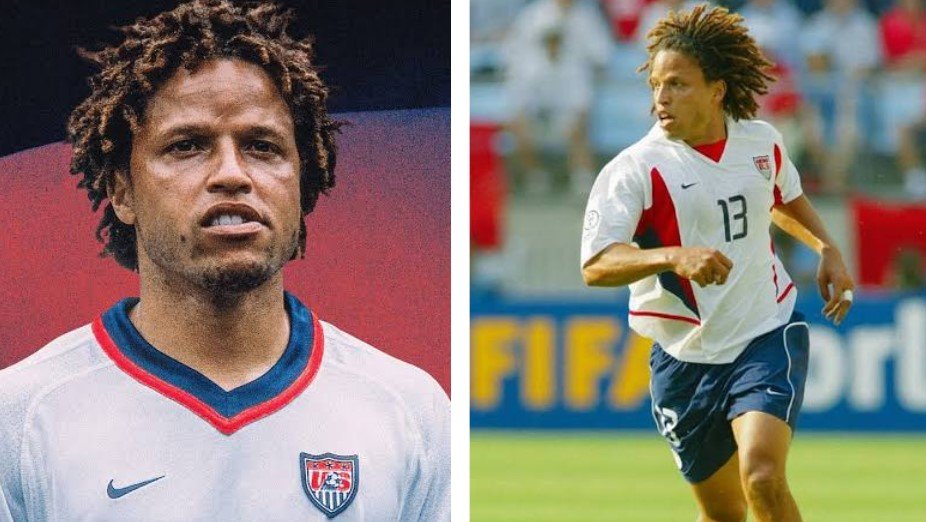
Cobi Jones is one of the most influential American soccer players of his generation, celebrated for his international achievements and remarkable professional career. From representing the United States in three FIFA World Cups to becoming a central figure in Major League Soccer, he helped shape the development of professional soccer in America. His long association with the LA Galaxy established him as one of the club’s most recognizable legends. With 164 international appearances, numerous championships, and a career spanning several countries, Jones achieved milestones that few American players have matched. However, his influence extends beyond his playing achievements through coaching, television broadcasting, youth development, and involvement in professional soccer organizations. His journey from a young soccer enthusiast in Southern California to a member of the National Soccer Hall of Fame offers an inspiring story of commitment, talent, and perseverance.
Quick Bio
| Detail | Information |
|---|---|
| Full Name | Cobi N’Gai Jones |
| Popular Name | Cobi Jones |
| Date of Birth | June 16, 1970 |
| Age | 56 years (as of November 2026) |
| Birthplace | Detroit, Michigan, United States |
| Nationality | American |
| Profession | Former Professional Soccer Player, Coach, Sports Broadcaster |
| Famous For | LA Galaxy and United States Men’s National Team |
| Playing Position | Midfielder |
| Height | 5 feet 7 inches (170 cm) |
| Education | University of California, Los Angeles (UCLA) |
| Wife | Kimberly Jones |
| Children | Two sons, Cayden and Cai |
| International Appearances | 164 |
| World Cup Appearances | 1994, 1998, 2002 |
| Former Club | LA Galaxy |
| Other Clubs | Coventry City, Vasco da Gama |
| National Soccer Hall of Fame | Inducted in 2011 |
| Current Professional Activities | Broadcasting, Soccer Development, Sports Investments |
Who Is Cobi Jones?
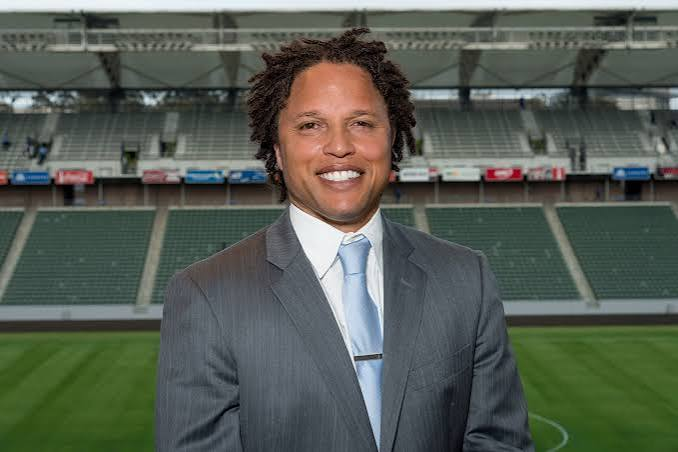
Cobi Jones is a retired American professional soccer player who became a major figure in the history of the United States Men’s National Team and Major League Soccer. His achievements helped establish him as one of the most recognizable personalities in American soccer during the 1990s and early 2000s.
Born on June 16, 1970, in Detroit, Michigan, Jones grew up in Westlake Village, California. He developed an interest in soccer during childhood and gradually turned that passion into a professional ambition.
His early performances attracted attention, eventually leading him to UCLA, where he played college soccer and helped the university win the 1990 NCAA championship.
After experiencing professional football in England and Brazil, Jones returned to the United States and joined the LA Galaxy in 1996. He became one of the club’s original stars and remained with the organization throughout his playing career.
His international achievements were equally impressive. Jones represented the United States in three FIFA World Cups and collected 164 senior international appearances. He also helped the national team reach the quarterfinals of the 2002 World Cup.
Beyond the field, Jones developed a successful career in broadcasting, coaching, and community sports initiatives. His continued involvement in soccer demonstrates that his influence extends well beyond his retirement as a professional player.
Early Life and Childhood in California
Although Cobi Jones was born in Detroit, his upbringing in Southern California played an important role in his development as a soccer player.
He grew up in Westlake Village, where he became interested in organized soccer at a young age. During his childhood, he played with local youth teams, including the Westlake Village Warriors.
At the time, soccer was still developing its popularity in the United States. American professional soccer did not have the same commercial presence as established European leagues, but youth participation continued to grow.
Jones remained committed to the sport and worked to improve his technical abilities. His dedication helped him progress through youth competitions and eventually opened opportunities at the collegiate level.
His childhood experiences also introduced him to the importance of discipline, teamwork, and physical preparation. These qualities became important throughout his professional career.
Rather than following a traditional path into a major professional academy, Jones developed through American youth and college soccer. That background later made him an important example of the opportunities available to American players.
Education and Soccer Development at UCLA
Cobi Jones attended the University of California, Los Angeles, where he played for the UCLA Bruins between 1988 and 1991.
His college career became an important stage in his development. He joined the program as a walk-on and gradually established himself as a valuable member of the team.
Jones contributed through his attacking ability, movement, passing, and understanding of the game. His performances helped UCLA compete against some of the strongest college soccer programs in the country.
The biggest achievement of his university career came in 1990, when the Bruins won the NCAA men’s soccer championship.
By the end of his college career, Jones had recorded 23 goals and 37 assists in 90 appearances.
These statistics reflected his ability to influence matches through both scoring and creating opportunities for teammates.
UCLA later recognized his contributions by inducting him into its Hall of Fame in 2002.
His college experience provided a strong foundation for professional soccer and prepared him for the international opportunities that followed.
Starting a Professional Career in England
After completing his college career, Jones pursued opportunities in professional soccer outside the United States.
In 1994, he joined Coventry City in England, becoming part of the English Premier League during an important period in his development.
Playing in England exposed him to a competitive football environment and introduced him to different tactical approaches.
For an American player at that time, gaining experience in a major European league was a valuable opportunity. Jones learned to adapt to a faster professional environment and compete against experienced international players.
Although his time with Coventry City was relatively short, it represented an important step in his career.
He later moved to Brazil and played for Vasco da Gama. This experience introduced him to another football culture and broadened his understanding of the international game.
His time abroad helped him develop into a more experienced player before he returned to the United States in 1996.
His Return to America and the Beginning of Major League Soccer
In 1996, Cobi Jones returned to the United States and joined the LA Galaxy during the inaugural season of Major League Soccer.
The creation of MLS represented an important development for American soccer. The country needed professional clubs, recognizable players, and a stronger domestic competition.
Jones became one of the league’s early stars.
He scored the first goal in LA Galaxy history, securing a special place in the club’s foundation.
His performances quickly made him an important player for the team. He contributed through goals, assists, attacking movement, and leadership.
Jones remained with the Galaxy throughout his MLS playing career, appearing in every one of the league’s first 12 seasons with the same team.
Between 1996 and 2007, he recorded 306 regular-season appearances, 70 goals, and 91 assists for the club.
These achievements established him as one of the most important players in the Galaxy’s history.
His number 13 jersey was eventually retired, becoming the first number retired by the club.
Cobi Jones and His Greatest LA Galaxy Achievements
Jones played a central role in the LA Galaxy’s development into one of the most successful teams in Major League Soccer.
During his playing years, the club won several major competitions, and Jones contributed to many of those achievements.
His most important team honors included:
- MLS Cup 2002: Helped the Galaxy win its first MLS Cup championship.
- MLS Cup 2005: Contributed to the club’s second championship during his playing career.
- Supporters’ Shield 1998: Part of the Galaxy team that finished with the league’s best regular-season record.
- Supporters’ Shield 2002: Helped the club secure another major regular-season honor.
- U.S. Open Cup 2001: Contributed to the Galaxy’s domestic cup success.
- U.S. Open Cup 2005: Helped the team win another national cup competition.
- CONCACAF Champions’ Cup 2000: Was part of the Galaxy squad that won the regional tournament.
His individual performances also earned considerable recognition.
In 1998, Jones received the U.S. Soccer Athlete of the Year award and earned selection to the MLS Best XI.
He also became one of the most productive players in the Galaxy’s early history, finishing his regular-season MLS career with 70 goals and 91 assists.
His combination of consistency and longevity made him a valuable player throughout the club’s formative years.
International Career With the United States
Cobi Jones’s international career is one of the strongest parts of his legacy.
He represented the United States Men’s National Team from 1992 to 2004 and earned 164 senior international appearances.
During this period, he became one of the country’s most dependable midfielders and participated in several major international tournaments.
His ability to contribute at the international level helped establish his reputation beyond Major League Soccer.
Jones also represented the United States at the 1992 Summer Olympics in Barcelona, gaining experience in international competition early in his senior career.
His national team appearances included three FIFA World Cups, making him one of the few American players of his generation to achieve that distinction.
1994 FIFA World Cup
The 1994 FIFA World Cup was an important event for American soccer because the United States hosted the tournament.
Jones represented his country during the competition and became part of a national team that reached the round of 16.
The tournament attracted significant attention to soccer in America and helped increase interest in the sport.
For Jones, participating in a home World Cup was a major professional milestone.
1998 FIFA World Cup
Jones returned to the World Cup stage in 1998 when the competition took place in France.
The United States experienced a difficult tournament and did not advance beyond the group stage.
Nevertheless, Jones gained additional international experience and continued to establish himself as a regular member of the national team.
His performances during this period strengthened his position as one of the country’s leading soccer players.
2002 FIFA World Cup
The 2002 FIFA World Cup in South Korea and Japan became one of the most successful tournaments in American men’s soccer history.
The United States advanced to the quarterfinals after producing several impressive performances.
Jones was part of the squad that achieved this result.
The team’s progress demonstrated the growing competitiveness of American soccer and created new interest in the national program.
He also helped the United States win the 2002 CONCACAF Gold Cup.
His participation in three consecutive World Cups remains one of the most recognizable achievements of his international career.
Why Cobi Jones Became an American Soccer Icon
Several factors helped establish Cobi Jones as an important personality in American soccer.
First, his international consistency made him a reliable member of the national team for more than a decade.
Second, his long association with the LA Galaxy connected him to the early development of Major League Soccer.
Third, his distinctive appearance, particularly his long dreadlocks, made him easily recognizable among soccer supporters.
During the 1990s, American soccer was still working to establish a stronger identity. Players such as Jones helped make the sport more visible and accessible to mainstream audiences.
His performances also demonstrated that American players could compete internationally while contributing to the growth of a domestic professional league.
Jones became more than a successful athlete. He represented an important generation of American soccer players who helped build the foundations for future success.
His Playing Style and Strengths on the Field
Cobi Jones played primarily as a midfielder and was particularly effective in attacking and wide positions.
His style combined speed, movement, work rate, and an ability to create attacking opportunities.
He regularly contributed to his team’s offensive play through passing, crossing, and forward movement.
His versatility allowed coaches to use him in different midfield roles depending on the team’s tactical requirements.
Jones also developed a reputation for consistency. He remained physically competitive and continued contributing to his club and national team over a long period.
His international experience in England and Brazil also helped him adapt to different styles of football.
Although he was not always the most technically celebrated player on the field, his determination and effectiveness made him an important part of the teams he represented.
Retirement and Transition Into Coaching
After the 2007 MLS season, Jones ended his professional playing career.
However, he remained connected to the LA Galaxy and moved into coaching.
He joined the club’s coaching staff as an assistant coach in November 2007 and continued working in that position through 2010.
The transition allowed him to share his experience with professional players and contribute to the team’s development from outside the playing field.
His understanding of professional soccer, built through domestic and international competition, provided valuable insight into the demands of the sport.
In 2011, he joined the New York Cosmos organization as associate director of soccer.
This role represented another step in his professional development and demonstrated his interest in the organizational side of soccer.
His post-playing career has consistently involved opportunities to support professional football and help expand the sport’s reach.
Broadcasting Career With FOX Sports
Television broadcasting became another major part of Cobi Jones’s professional life.
He joined FOX Sports in 2010 and established himself as a soccer analyst.
His experience as a former professional player allowed him to explain matches, tactics, and player performances from an informed perspective.
His broadcasting work has included major competitions such as the FIFA World Cup, FIFA Women’s World Cup, CONCACAF Gold Cup, and other international soccer tournaments.
He also worked with NBC during its coverage of the 2012 London Olympics.
Beyond FOX Sports, Jones has contributed to soccer coverage through networks and platforms including beIN Sports, Pac-12 Network, and Spectrum SportsNet.
His broadcasting work has allowed him to remain connected to the sport while sharing his knowledge with television audiences.
For viewers, his analysis offers insight into the demands of professional soccer from someone who experienced international competition firsthand.
Cobi Jones’s Wife and Family Life
Outside soccer, Cobi Jones maintains a family life with his wife, Kimberly Jones.
Publicly available biographies identify the couple as parents of two sons, Cayden and Cai.
The family resides in Los Angeles, California.
Although Jones has spent much of his professional life in the public eye, he generally maintains a relatively private approach to family matters.
His wife and children have not pursued the same level of public recognition as he has through professional sports.
The LA Galaxy’s tribute to Jones has also highlighted the importance of family support throughout his career. His wife, Kim, was involved in the process surrounding the creation of his 2026 statue.
Beyond these publicly documented details, information about the family’s private activities remains limited.
Business Interests and Angel City FC
Cobi Jones has expanded his professional activities beyond traditional soccer roles.
One important part of his business involvement is Angel City FC, a professional women’s soccer club based in Los Angeles.
Jones is an investor and owner associated with the club, which competes in the National Women’s Soccer League.
Angel City FC has attracted attention for its approach to women’s professional soccer, community engagement, and investment in the development of the sport.
His involvement reflects his continued interest in supporting soccer opportunities across different levels of the game.
The club also provides a connection between his playing legacy and the future of professional soccer in Southern California.
His participation demonstrates that his interest in the sport extends beyond men’s professional competitions.
Community Involvement and Youth Soccer Development
Community involvement has remained an important part of Jones’s activities.
He has worked with organizations that promote youth participation, sports development, and greater access to soccer.
His involvement includes the U.S. Soccer Foundation, AYSO, the LA84 Foundation, Cal South, and other sports-related organizations.
These groups support programs that introduce young people to organized sports and help develop future athletes.
Jones has also participated in the U.S. Department of State’s Sports Envoy Program.
Through this initiative, athletes and sports professionals help promote international connections through sporting activities.
He has also represented the White House at major international soccer events as part of presidential delegations.
These activities demonstrate that his influence extends beyond professional matches.
His work in community programs reflects a commitment to making soccer accessible to younger generations.
Cobi Jones’s Net Worth and Financial Life
Cobi Jones has developed several professional income opportunities throughout his career.
His playing years with the LA Galaxy and the United States national team established his professional reputation.
After retirement, he expanded his activities into coaching, television broadcasting, sports investments, and community initiatives.
His association with FOX Sports and Angel City FC represents important parts of his professional life beyond playing.
However, a verified current figure for Cobi Jones’s personal net worth is not reliably documented in authoritative public sources.
Online estimates should therefore be treated cautiously.
His professional earnings, business investments, and ownership interests cannot automatically be combined into a confirmed personal wealth figure.
National Soccer Hall of Fame and Major Recognition
One of the most important honors in Jones’s career came in 2011 when he was inducted into the National Soccer Hall of Fame.
The recognition celebrated his achievements with the United States national team and his contributions to professional soccer.
His international career, including 164 appearances and participation in three World Cups, played an important role in establishing his reputation.
UCLA also recognized his contributions by inducting him into its Hall of Fame in 2002.
The LA Galaxy has honored him through its Ring of Honor and the retirement of his number 13 jersey.
These recognitions demonstrate the respect he earned from the institutions and organizations connected to his career.
The LA Galaxy Statue Unveiling in 2026
In January 2025, the LA Galaxy announced plans to honor Jones with a bronze statue at Legends Plaza outside Dignity Health Sports Park.
The ceremony took place on April 26, 2026, making him the third Galaxy legend to receive a statue at the venue, following David Beckham and Landon Donovan.
The tribute recognized his contribution to the club during its early MLS years and his importance to American soccer.
The statue became another permanent reminder of his achievements and connection with Galaxy supporters.
It also represented the club’s appreciation for a player who helped shape its identity from the beginning.
What Is Cobi Jones Doing Today?
Cobi Jones remains connected to soccer through broadcasting, business activities, and community involvement.
His work as a soccer analyst allows him to continue discussing major competitions and sharing his experience with football audiences.
He also maintains connections with organizations that support youth soccer and professional sports development.
His involvement with Angel City FC reflects his interest in the continued growth of women’s soccer.
In addition, his recognition as a Los Angeles World Cup 2026 Community Ambassador connected his experience and public profile with preparations for the tournament.
The unveiling of his Galaxy statue in April 2026 further strengthened his relationship with the club and its supporters.
Although his playing days are over, Jones continues to contribute to the sport in different professional capacities.
Conclusion
Cobi Jones has built a remarkable legacy through his achievements in American and international soccer. From his early development in Southern California to his championship-winning career with the LA Galaxy, he demonstrated the importance of dedication, consistency, and professional commitment.
His participation in three FIFA World Cups and his record of 164 international appearances established him as one of the most important American players of his generation.
His contribution to Major League Soccer was equally significant. As one of the original LA Galaxy stars, he helped establish the club’s identity and became a central figure in its early success.
However, his story did not end with retirement. Through coaching, broadcasting, sports investments, and youth development, he has continued supporting the growth of soccer.
His National Soccer Hall of Fame induction and the 2026 unveiling of his LA Galaxy statue represent lasting recognition of his achievements.
Today, Cobi Jones remains an influential figure in American soccer. His career represents not only individual success but also an important period in the development of professional soccer in the United States.
FAQs
Who is Cobi Jones?
Cobi Jones is a retired American professional soccer player, coach, and television analyst. He is famous for his achievements with the LA Galaxy and the United States Men’s National Team.
When was Cobi Jones born?
Cobi Jones was born on June 16, 1970, in Detroit, Michigan, United States. He grew up in Westlake Village, California.
What is Cobi Jones famous for?
He is famous for playing in three FIFA World Cups and earning 164 international appearances for the United States. He also spent 12 MLS playing seasons with the LA Galaxy.
How many World Cups did Cobi Jones play in?
Cobi Jones represented the United States in three FIFA World Cups: 1994, 1998, and 2002. He was also part of the American team that reached the 2002 quarterfinals.
Which clubs did Cobi Jones play for?
His professional career included Coventry City in England, Vasco da Gama in Brazil, and the LA Galaxy in Major League Soccer. He spent the majority of his professional playing career with the Galaxy.
Who is Cobi Jones’s wife?
Cobi Jones is married to Kimberly Jones. Public biographies identify them as parents of two sons, Cayden and Cai.
How many goals did Cobi Jones score for LA Galaxy?
Jones scored 70 regular-season MLS goals and provided 91 assists in 306 appearances for the LA Galaxy. These achievements helped establish him as one of the club’s greatest players.
Is Cobi Jones in the National Soccer Hall of Fame?
Yes. Cobi Jones was inducted into the National Soccer Hall of Fame in 2011. His achievements with the United States national team and LA Galaxy contributed to this recognition.
What is Cobi Jones’s net worth?
His exact current net worth has not been verified through authoritative public sources. Although he has earned money through soccer, broadcasting, and business interests, no reliable personal wealth figure is publicly established.
What does Cobi Jones do after retirement?
After retiring from professional soccer, Jones moved into coaching, broadcasting, business, and community development. He remains involved in the sport through FOX Sports, Angel City FC, and youth soccer initiatives.
Does Cobi Jones still work with LA Galaxy?
Jones remains an important part of the LA Galaxy’s history and maintains a connection with the club. The organization honored him with a bronze statue unveiled at Dignity Health Sports Park on April 26, 2026.
Why is Cobi Jones important to American soccer?
Jones helped establish American soccer’s growing international reputation through his World Cup appearances and consistent national team performances. His long LA Galaxy career also contributed to the early development and popularity of Major League Soccer.
For more information: Digital Scroll