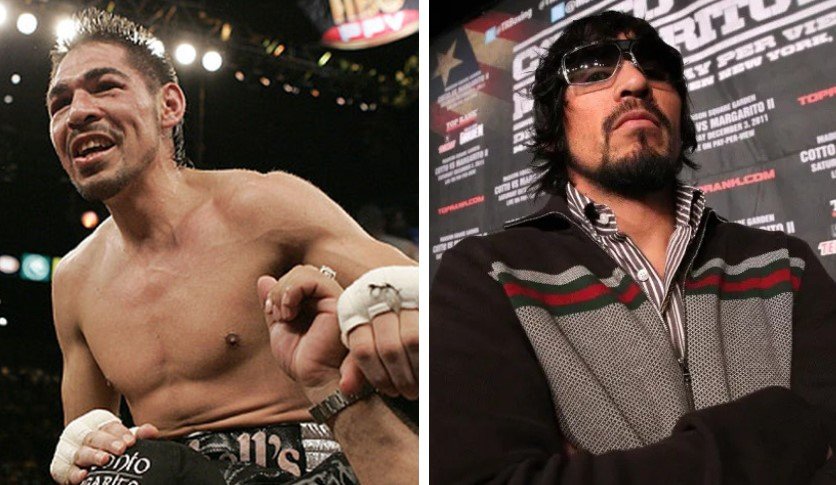
Antonio Margarito is a Mexican-American former professional boxer remembered for his aggressive fighting style, remarkable durability, and long career in the welterweight division. Known as “El Tornado de Tijuana,” he became one of boxing’s most recognizable fighters during the 2000s. His victories over respected opponents established him as a world champion, while his rivalries with elite fighters brought him international attention. Margarito’s career also became associated with controversy following an illegal hand-wrap discovery before his 2009 fight against Shane Mosley. That incident changed the public conversation surrounding his achievements and affected how many fans viewed his legacy. From his rise through professional boxing to his championship success, career setbacks, and eventual return to the ring, Margarito’s story reflects both the excitement and difficult questions that can surround a major sporting career.
Quick Bio
| Detail | Information |
|---|---|
| Full Name | Antonio Margarito Montiel |
| Nickname | El Tornado de Tijuana |
| Profession | Former professional boxer |
| Nationality | Mexican-American |
| Birth Date | March 18, 1978 |
| Birthplace | Torrance, California, United States |
| Boxing Division | Welterweight and other professional weight classes |
| Fighting Style | Orthodox |
| Known For | World titles, aggressive pressure fighting, major boxing rivalries |
| Major Opponents | Miguel Cotto, Shane Mosley, Manny Pacquiao, Joshua Clottey |
| World Championship | Former WBO, IBF, and WBA welterweight champion |
| Professional Debut | 1994 |
| Public Status | Retired from professional boxing after his final bout in 2017 |
Who Is Antonio Margarito?
Antonio Margarito is a former professional boxer whose career combined world championship success, memorable rivalries, and one of the most controversial incidents in modern boxing. Born in California and raised in Tijuana, Mexico, he developed into a tough, forward-moving fighter who frequently pressured opponents rather than relying on movement alone.
His nickname, “El Tornado de Tijuana,” reflected the relentless approach that made him difficult to handle in the ring. Margarito was willing to absorb punches to deliver his own, and his stamina often allowed him to maintain pressure deep into fights. This approach helped him become a leading figure in the welterweight division during an era filled with accomplished fighters.
However, Margarito’s legacy cannot be understood through victories and titles alone. His 2009 hand-wrap controversy, followed by difficult losses and a later comeback, created a complicated story that continues to divide boxing fans.
Growing Up Between California and Tijuana
Margarito was born on March 18, 1978, in Torrance, California. He grew up in Tijuana, Baja California, Mexico, where boxing became an important part of his early life. The city’s strong boxing culture offered an environment in which a determined young fighter could develop his skills and pursue professional competition.
He began boxing at a young age and entered the professional ranks as a teenager. Rather than spending an extended period building an amateur record, Margarito moved quickly into paid competition. His early professional fights gave him experience against different opponents and helped him develop the durability that later became a defining characteristic.
His background also shaped his public identity. Although born in the United States, Margarito became closely associated with Mexican boxing culture and represented a fighting style that many fans admired for its toughness and willingness to engage.
How Antonio Margarito Built His Professional Career
Margarito made his professional debut in 1994. The early stages of his career involved the gradual development expected of a young boxer, with victories, setbacks, and opportunities to gain experience against increasingly difficult opposition.
He did not become a major international name overnight. Instead, his reputation grew through consistent activity and a style that placed pressure on opponents. Margarito frequently worked behind a steady jab, attacked the body, and attempted to wear down fighters who preferred to control distance.
His physical resilience became particularly important. Opponents could land clean punches without necessarily discouraging him from advancing. That quality made Margarito a demanding matchup, especially for fighters who struggled to maintain their pace over multiple rounds.
As his experience increased, he established himself as a serious contender at welterweight. His rise eventually led to world championship opportunities and fights against some of the most respected names of his generation.
Winning the WBO Welterweight Championship
One of the defining achievements of Margarito’s career came in March 2002, when he defeated Antonio Díaz to win the World Boxing Organization welterweight title.
The victory represented a major step forward. A world championship gave Margarito greater recognition and placed him among the division’s leading fighters. He held the WBO belt until 2007, building a substantial championship run through successful defenses and competitive performances.
His reign demonstrated that he was more than an aggressive opponent who relied on toughness. He could maintain a demanding pace across championship distance and impose his approach against experienced professionals.
Although his career included losses, the extended period as WBO champion established the foundation for his reputation. Margarito had become a significant figure in a division that would soon feature several high-profile rivalries.
The Kermit Cintrón Rivalry and Championship Momentum
Margarito’s fights with Kermit Cintrón were important milestones in his development as a champion. The two met in 2005, when Margarito stopped Cintrón in the fifth round, successfully defending his WBO title.
Their rematch in 2008 carried even greater significance because Cintrón held the IBF welterweight championship. Margarito won by technical knockout in the sixth round, adding another world title to his record.
These performances reinforced his standing as one of the division’s most dangerous pressure fighters. He was particularly effective when he could close the distance, work the body, and prevent opponents from settling into a comfortable rhythm.
The victories also helped prepare Margarito for the larger stage. His next major challenge would come against an unbeaten fighter widely respected for his technical ability and disciplined approach.
The Famous Connection: Antonio Margarito and Miguel Cotto
Margarito’s rivalry with Puerto Rican star Miguel Cotto became one of the defining chapters of his career. Their first meeting, held in Las Vegas in July 2008, brought together two established welterweights with contrasting strengths.
Cotto was known for his polished boxing, precise combinations, and ability to control exchanges. Margarito relied more heavily on sustained pressure, physical strength, and the willingness to keep fighting through difficult moments.
Their contest developed into a punishing battle. Cotto enjoyed success early, but Margarito continued to press forward and gradually changed the momentum. In the 11th round, Margarito stopped Cotto to win the WBA welterweight championship.
The victory elevated Margarito’s profile and became one of the most discussed results of that period. It also set up his next fight against Shane Mosley, an event that would dramatically alter the way the public viewed his career.
The Cotto rivalry eventually resumed in 2011, after both fighters had experienced major changes in their careers. Their second bout ended with Margarito being stopped in the 10th round. The rematch provided a sporting conclusion to a rivalry that had remained controversial because of the events surrounding Margarito’s 2009 fight with Mosley.
Who Was Shane Mosley, and Why Did His Fight With Margarito Matter?
The most consequential professional connection in Margarito’s career
Shane Mosley, nicknamed “Sugar,” was an American professional boxer and multiple-division world champion. Recognized for his speed, combinations, and adaptability, Mosley established himself as one of the leading fighters of his era. His career included major victories over accomplished opponents and memorable contests against boxing’s biggest names.
Mosley’s connection to Margarito became especially significant on January 24, 2009, when the two met at the Staples Center in Los Angeles. Margarito entered the contest as the reigning WBA welterweight champion, while Mosley sought another major championship victory. Mosley dominated much of the fight and stopped Margarito in the ninth round, handing him the first stoppage defeat of his professional career.
The result was already a major sporting upset, but the discovery of an illegal substance in Margarito’s hand wraps before the contest made the event far more consequential. The subsequent investigation and suspension became central to Margarito’s public reputation, while Mosley’s victory remained one of the most important results of his career.
The 2009 Hand-Wrap Controversy
Before the Mosley fight, Mosley’s trainer, Naazim Richardson, raised concerns about the material inside Margarito’s hand wraps. Officials inspected the wraps and removed pads containing a suspicious substance. Laboratory testing subsequently identified material similar to plaster of Paris, prompting a formal investigation.
The California State Athletic Commission revoked the boxing licenses of Margarito and his trainer, Javier Capetillo, for at least one year in February 2009. The commission held Margarito responsible for irregularities within his team, although Margarito maintained that he had not knowingly used illegal materials. Capetillo accepted responsibility for placing the inserts in the wraps.
The incident had consequences beyond the suspension. Questions emerged about whether the circumstances could affect the interpretation of Margarito’s previous performances, particularly his victory over Cotto. However, the controversy does not establish that every earlier win was achieved through illegal means.
For Margarito, the episode became a lasting part of his boxing story. His championship achievements continued to be recognized, but discussions of his career increasingly included the controversy alongside his victories.
Returning to the Ring After His Suspension
Margarito eventually returned to competition after serving his suspension. His comeback demonstrated that he remained a commercially significant fighter, even though his standing among fans and boxing observers had changed.
He fought Roberto García in May 2010, winning by unanimous decision. The victory helped him reestablish himself in the sport and led to a major opportunity against Manny Pacquiao later that year.
His return also illustrated how complicated the path back to elite boxing can be. A suspended fighter must regain competitive form while facing public scrutiny and questions about trust. Margarito’s comeback drew attention because it involved both a former champion seeking to rebuild his career and an athlete whose reputation had been seriously damaged.
Antonio Margarito vs. Manny Pacquiao
Margarito faced Manny Pacquiao on November 13, 2010, in a contest for the vacant WBC super welterweight title. Pacquiao was already one of boxing’s biggest stars, celebrated for his speed, offensive combinations, and success across multiple weight divisions.
Margarito was the larger fighter, but Pacquiao’s movement and relentless attacks proved difficult to contain. Pacquiao won by unanimous decision after 12 rounds, capturing another world title.
The fight was also physically demanding for Margarito. He suffered serious facial injuries, including damage around his right eye, and required surgery afterward. The punishment he absorbed became an important consideration in discussions about his future in professional boxing.
Despite the defeat, the bout demonstrated Margarito’s willingness to compete against elite opposition. It also marked a difficult stage in his career, as his earlier reputation for durability met the physical consequences of repeated high-level fights.
Why the Miguel Cotto Rematch Was So Important
When Margarito and Cotto met again in December 2011, their first encounter remained a major subject of discussion. Cotto had questioned the circumstances surrounding his 2008 defeat following the hand-wrap scandal, and the rematch offered an opportunity for both men to settle the rivalry in the ring.
Cotto controlled much of their second contest and won by technical knockout in the 10th round. The referee stopped the fight after Margarito suffered significant swelling around his eye.
The result was a meaningful moment for Cotto and another difficult setback for Margarito. It also reinforced concerns about the damage accumulated during Margarito’s career, particularly after his punishing contest with Pacquiao.
Their two fights remain closely connected in boxing discussions because they combine championship competition, a memorable first result, and the controversy that followed.
What Made Margarito’s Fighting Style Different?
Margarito’s style was built around forward pressure. Rather than depending primarily on defensive movement, he often advanced behind his punches, attempted to trap opponents near the ropes, and worked steadily to the body.
His most recognizable strengths included:
- Pressure fighting: He frequently forced opponents to defend for long stretches instead of allowing them to dictate the pace.
- Stamina: Margarito was comfortable maintaining a demanding work rate over championship-distance fights.
- Physical toughness: He became known for absorbing punishment while continuing to press forward.
- Body punching: Sustained attacks to the body helped him wear down opponents over time.
- Experience: Years of professional competition prepared him for challenging fights against world-class opposition.
These qualities made him a difficult opponent, but they also exposed him to punishment. His career illustrates the trade-off that can come with a style built on taking risks to maintain pressure.
Antonio Margarito’s Championship Achievements
Margarito’s record includes accomplishments that established him as a major welterweight champion before and after his most controversial period.
| Achievement | Significance |
|---|---|
| WBO welterweight title, 2002 | Established him as a world champion |
| Long WBO title reign | Kept him among the division’s leading fighters |
| Victory over Kermit Cintrón, 2005 | Defended his WBO championship |
| Victory over Kermit Cintrón, 2008 | Added the IBF welterweight title |
| Victory over Miguel Cotto, 2008 | Won the WBA welterweight championship |
| Fight against Manny Pacquiao, 2010 | Challenged for the WBC super welterweight title |
His accomplishments demonstrate why Margarito was considered a significant figure in boxing during the 2000s. His career also shows why athletic achievements and questions of sporting conduct can become inseparable when a major controversy changes the public’s perception of a fighter.
Retirement in 2012 and a Later Comeback
In June 2012, Margarito announced his retirement from professional boxing. His decision followed consecutive defeats to Pacquiao and Cotto, as well as concerns about injuries and his ability to continue competing at the level he expected of himself. At the time, his professional record stood at 38 wins, eight losses, and 27 knockouts.
His retirement did not last permanently. Margarito returned to professional competition in 2016 and fought several more times before his final bout in 2017.
The comeback gave him another opportunity to compete, but it did not restore the championship position he had held earlier in his career. His final years in boxing were a reminder that returning to the ring after a long absence can be difficult, particularly for a fighter who has experienced substantial physical punishment.
Antonio Margarito’s Life Outside Boxing
Margarito’s public identity has largely centered on his professional career. While boxing coverage has documented his championships, major fights, suspension, and comeback, reliable details about his private life and activities outside the sport are more limited.
He announced his retirement with the intention of beginning another chapter while remaining connected to boxing. However, specific claims about his current business ventures, personal investments, or everyday activities should not be treated as established facts without reliable documentation.
His story remains relevant to boxing audiences because of the combination of his achievements and the controversy that changed his career. Beyond the ring, it is important to distinguish publicly documented events from unsupported claims about his personal circumstances.
Antonio Margarito’s Net Worth and Financial Life
A verified current net worth for Antonio Margarito is not reliably established through authoritative public financial records. Although he competed in major pay-per-view events and world championship fights, those opportunities do not provide enough information to calculate his present wealth.
A boxer’s career earnings are also different from personal net worth. Taxes, training expenses, management fees, promotional arrangements, investments, and other financial commitments can affect how much money an athlete retains.
Margarito’s fights against Cotto, Mosley, and Pacquiao placed him in major boxing events, but assigning him a precise net worth without reliable financial documentation would be speculative.
How Antonio Margarito Is Remembered Today
Margarito’s legacy remains complicated. His championship reign, victories over respected opponents, and demanding fighting style established him as an important welterweight contender and champion of his generation.
At the same time, the 2009 hand-wrap incident remains a defining part of his public story. The suspension and questions surrounding the controversy continue to influence how some fans assess his accomplishments, particularly his first victory over Cotto.
His career also included significant physical setbacks, a retirement announcement, and a return to professional competition. Taken together, these events make Margarito a notable example of how sporting achievement, accountability, and reputation can intersect in professional boxing.
Conclusion
Antonio Margarito’s career was shaped by much more than his nickname or aggressive fighting style. He rose from a young professional boxer with roots in Tijuana to a multi-title welterweight champion, defeating respected opponents and competing against some of the sport’s biggest names.
His victories over Kermit Cintrón and Miguel Cotto demonstrated his championship ability, while his defeat to Shane Mosley and the subsequent hand-wrap investigation permanently complicated his legacy. Later losses to Manny Pacquiao and Cotto, followed by retirement and a brief comeback, brought his career to a close.
Margarito remains a memorable figure in boxing history because his story includes both genuine athletic accomplishments and serious questions about sporting conduct. Understanding both sides provides a more complete picture of the former champion.
FAQs
Who is Antonio Margarito?
Antonio Margarito is a Mexican-American former professional boxer who competed from 1994 to 2017. He became a world champion in the welterweight division and was known for his aggressive pressure fighting and memorable championship bouts.
What is Antonio Margarito famous for?
Margarito is known for winning the WBO, IBF, and WBA welterweight championships. His rivalry with Miguel Cotto, his fight against Shane Mosley, and the 2009 hand-wrap controversy are major parts of his public legacy.
What happened between Antonio Margarito and Shane Mosley?
Mosley defeated Margarito by ninth-round technical knockout in January 2009. Before the fight, officials discovered illegal hand-wrap inserts containing a plaster-like substance, leading to an investigation and the revocation of both Margarito’s and his trainer’s California boxing licenses for at least one year.
Did Antonio Margarito defeat Miguel Cotto?
Yes. Margarito defeated Cotto by 11th-round technical knockout in July 2008 to win the WBA welterweight championship. Cotto won their rematch in December 2011 when the referee stopped the contest in the 10th round.
Did Antonio Margarito fight Manny Pacquiao?
Yes. Margarito faced Pacquiao in November 2010 for the vacant WBC super welterweight title. Pacquiao won by unanimous decision, and Margarito sustained serious facial injuries that required surgery.
When did Antonio Margarito retire from boxing?
Margarito announced his retirement in June 2012 after suffering consecutive defeats to Pacquiao and Cotto. He later returned to professional boxing in 2016, with his final recorded bout taking place in 2017.
What is Antonio Margarito’s net worth?
A verified current net worth for Margarito is not publicly established through authoritative financial sources. His career earnings from major boxing events are not sufficient on their own to determine his current personal wealth.
For more information: Digital Scroll